What Rutherford County storms actually do to trees
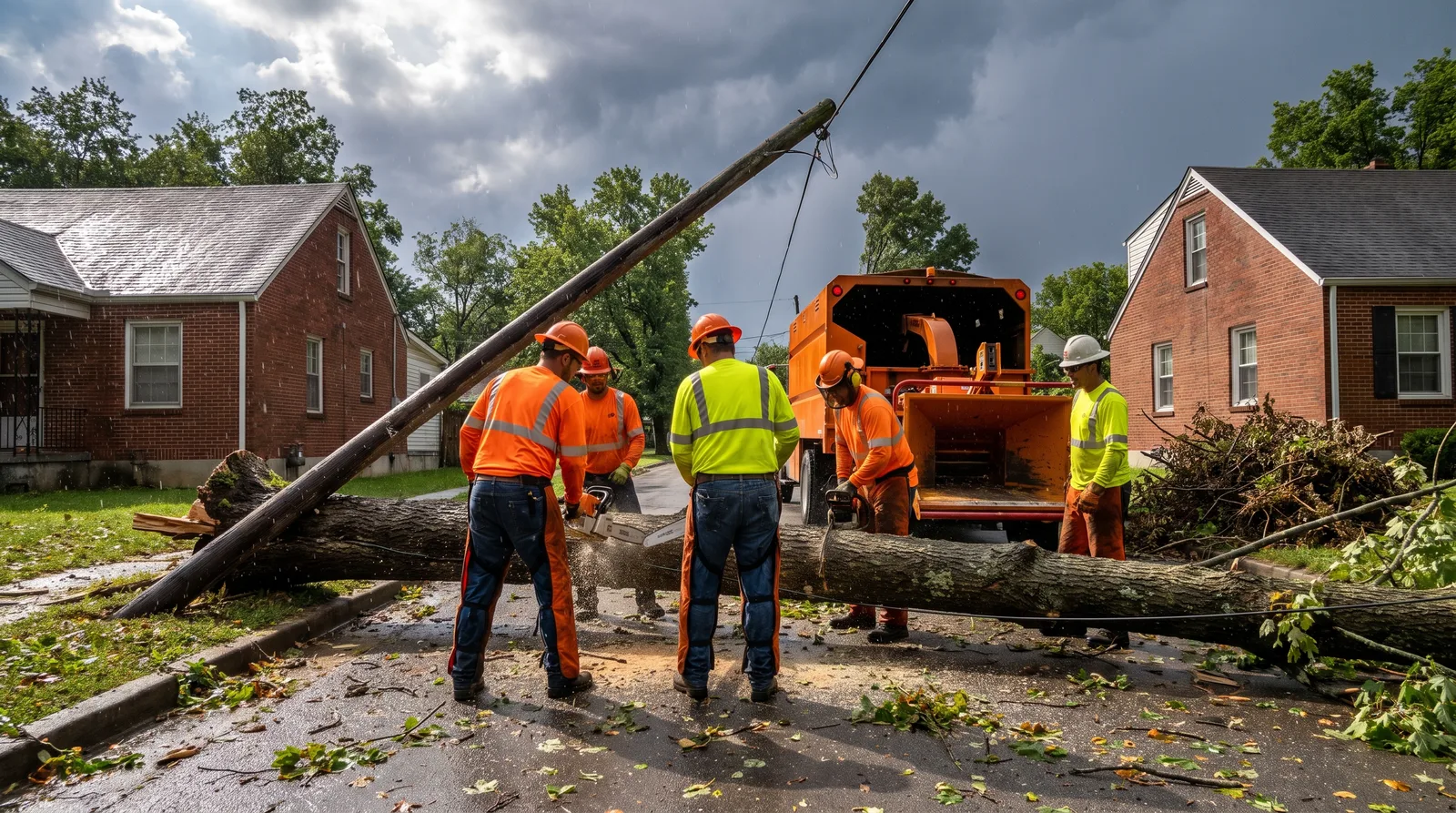
The county's storm log reads like a pruning schedule. The F4 of January 1997 through Barfield and Southridge; the F3 at Walter Hill in May 2003; the Good Friday EF4 of April 10, 2009, 23 miles from Eagleville to Lascassas; the February 2015 ice storm; the March 25, 2021 tornado through Smyrna's Clarkston Square; the July 30, 2024 EF-0 and downburst along Medical Center Parkway; the March 15, 2025 EF-1 through Christiana; the May 20, 2025 storms that put trees on roofs on Kindness Way and Florence Road. A direct tornado hit takes everything. Everything else — the ice, the downbursts, the 60-mile-an-hour fronts — takes the same trees every time: hackberries with heavy limbs and hidden decay, silver maples and Bradford pears with weak unions, dead ash, and big shallow-rooted trees on saturated ground.
Why our ground makes it worse
Murfreesboro sits on a few inches to a couple of feet of soil over limestone. Big trees here root wide and shallow instead of deep, and when a wet February saturates that thin layer, a March front levers the whole root plate up. That's why so many county storms end with big trees lying flat with their roots in the air rather than snapped. It's also why a tree that's been leaning a little more each spring is telling you something.
What to do before March
1. Take out the trees that are already failing
Dead ash. Hackberries with a hollow base. Silver maples with a crack down the fork. Bradford pears over twenty years old that are over the roof or the driveway. These aren't pruning candidates; they're removals, and they're cheaper in January than in the storm.
2. Thin and reduce the big ones over the house
Crown cleaning takes out the dead and broken wood that flies first. Thinning lets wind through a heavy hackberry or maple canopy instead of pushing on it like a sail. Reduction cuts bring the end weight back off the limbs over the roof. Done to the ANSI A300 standard this helps; topping does the opposite, producing a mop of weak shoots that break in the next ice.
3. Cable the ones worth keeping
A valuable maple or oak with one weak fork can be cabled and braced so the leaders can't split apart in wind. See cabling and bracing.
4. Look at the roots
Mushrooms at the base, soil heaving on one side of the trunk, or a lean that's changed since last year all point to root problems, and root problems are whole-tree failures. Have an arborist look.
Ice is different
Ice loads every twig. Trees with fine, dense branching — Bradford pears, silver maples, hackberries with witches' brooms — carry the most weight and break first. Cedar and pine bend and often spring back. The February 2015 storm was the lesson: the pears split, the maples shed limbs, and the oaks mostly stood. There's no pruning that makes a Bradford pear ice-proof; there's only replacing it.
The morning after
Stay away from anything touching a power line and call Middle Tennessee Electric. Photograph everything before it's touched. Don't cut a trunk that's under tension or a root plate that could spring upright. Call for the tree on the house first, the hangers second, the yard third — and get a written price from whoever you hire, because the out-of-state crews that appear after every storm quote by the hour and disappear before the invoice reaches your insurer.
Common questions
When is tornado season in Middle Tennessee?
The main season runs March through May, with a second peak in November and December — Rutherford County's biggest tornadoes have come in January, March, April and May. Straight-line wind events run all summer.
Should I top my trees to make them safer?
No. Topping is the single most damaging thing you can do to a tree and makes it less safe within a few years. Thin, reduce and cable instead, or remove.
Which trees around my house should go before storm season?
Dead ash, hollow hackberries, cracked silver maples and mature Bradford pears over the house, driveway or a neighbor's property. Everything else is usually a pruning question.
Can you tell if a tree is going to fall?
Nobody can promise. An arborist can tell you which trees have the defects that fail — decay, cracked unions, root problems, lean — and which ones are sound. That's what the free on-site look is for.
How far in advance should I book storm prep?
January and February are ideal: crews are available, trees are dormant, and it's done before March. Booking in April is booking behind everyone else.
Related: Emergency tree service · Storm cleanup · Tree trimming · Insurance & tree removal